
A year in the studio, and what actually changed
Tips on wall stories
I haven’t written for more than a year. I hope you are still here?
It was a winter of sorts in the studio; silence, introspection, and the slow making of something that felt authentic. Most of that year was a deconstruction of my illustrative book work. What happens when those scenes move onto a wall? What happens when the figures get larger, stranger and less polite?

From Belonging, a collection available at Oxford Street Gallery from 19th October 2026.
It was a year of frustration too. Slow. Often uncertain. What kept me moving was curiosity — the need to find a way of working that belonged to this next chapter rather than the last one. The silence was the work.
Eventually a few things surfaced. Not all at once. Just enough clarity to feel the work standing on its own feet. If you are an illustrator thinking of canvas, these are three shifts that helped me.
1. Create presence
Academic painting often lights the scene from outside. Illustrative art tells things differently.
Once I stopped trying to light the scene and started letting the figures carry their own presence the work changed. I was no longer explaining a moment. I was making presence.
What to try
Instead of blocking light and shadow as a first step, let the figures emerge first.
Push colour from the centre of the body outward, rather than from a window inward. A cheek, a shoulder, the inside of a cup can hold the brightest note.
Constantly ask: does this character exude personality, or is the figure shone upon?
You will know it is working when the painting does not need a lamp in the story to feel alive. Home is within.
2. Do not shrink the work to make it sellable
I was told, more than once, that the paintings were too big — that smaller ones would sell. I tried. The small canvases felt like narrow aisles. They panicked me.
Painting, for me, needs room: bold gestures, space to disappear into. Rose Wylie said there is nothing nicer than paintings dominating a room. It is a way to lose yourself in the work. That is what I want from the work: to lose myself in it, as a creator but as a viewer too.
The size is not a marketing discussion. It is part of the meaning.
What to try
If a small study feels cramped, believe that feeling. Do one large piece before you decide “large is impractical.”
Stand close to the canvas. Work with the shoulder, not only the wrist. Illustration trains the hand for the page. Painting large scale needs your entire self.
Let the figure be incomplete; scale is by how much air the image is allowed to keep.
A large work in a modest room is not a mistake. It changes how a person stands in front of it. That is part of belonging.
If walls are real limits, work in series on mid-size canvases that still allow a full gesture — not miniatures of an idea that wanted to be big.
If the work is asking for more air, let it have more air.
3. Learn the techniques, then drop them
Yes, you still need enough structure to hold a painting together — values, contrasts, a composition that can breathe. Without that, the work falls apart.
But once you are making a style that is yours, the old rules have to go. They become tools you can pick up or put down, not a system you have to obey.
Illustration wants clarity. Painting wants an undercurrent. The breakthrough was accepting both. You find the voice by working from what you mean — not by applying a method and hoping the meaning will arrive afterwards.
What to try
Keep the storytelling lightness from your illustrations — a cup, a gathered figure, a pause in a room.
Step away for a day. The painting will tell you what it needs.
Scrape back. Leave a ghost of the drawing. Process on the surface is not sloppiness; it is evidence that something was searched for.
Write one sentence for the work before you begin. Paint toward the feeling of that sentence, not toward illustrating every word.
If a rule is helping the painting and translating what you want to say, keep it. Otherwise, let it go.
You find the voice by working from what you mean.
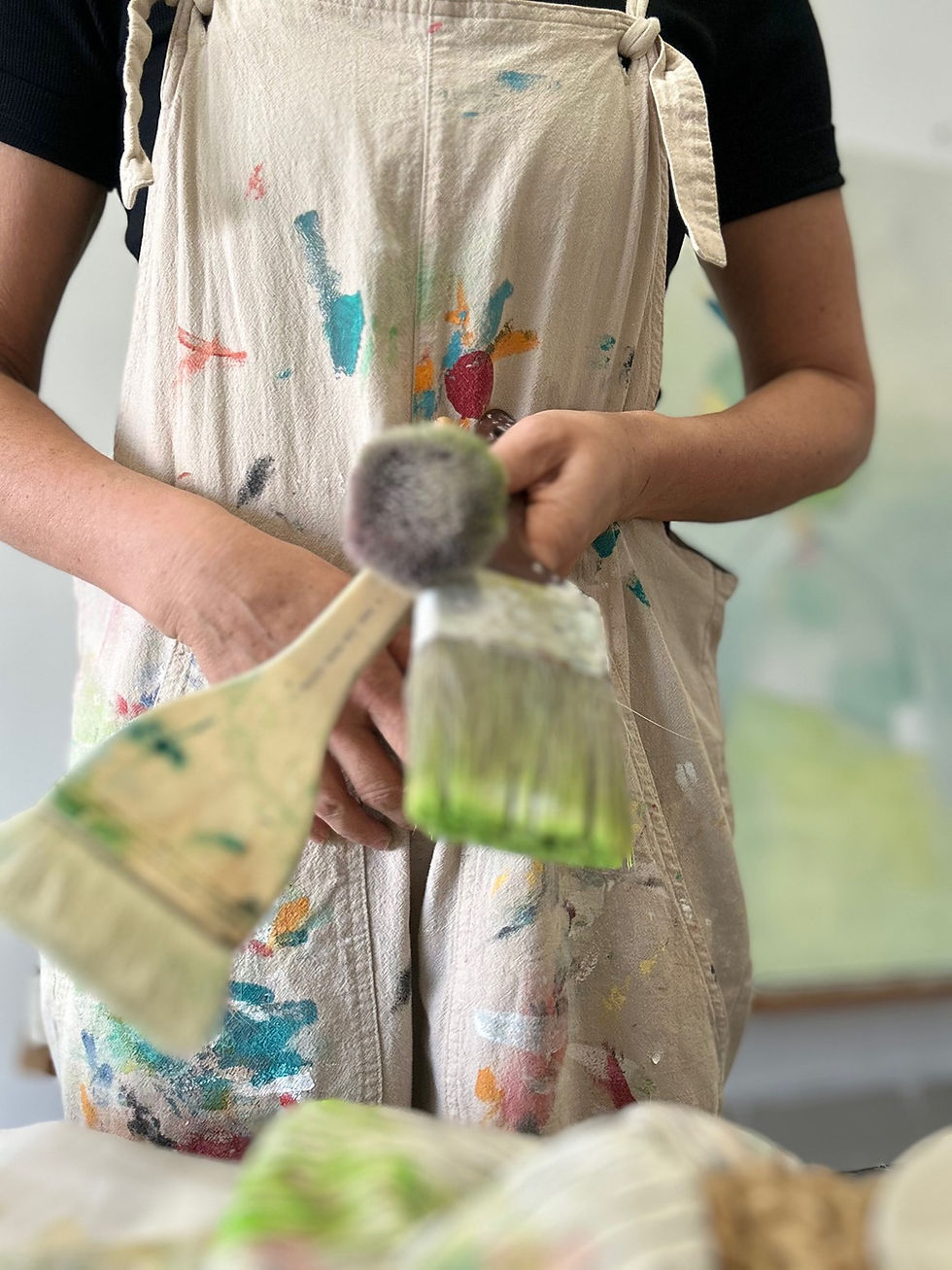
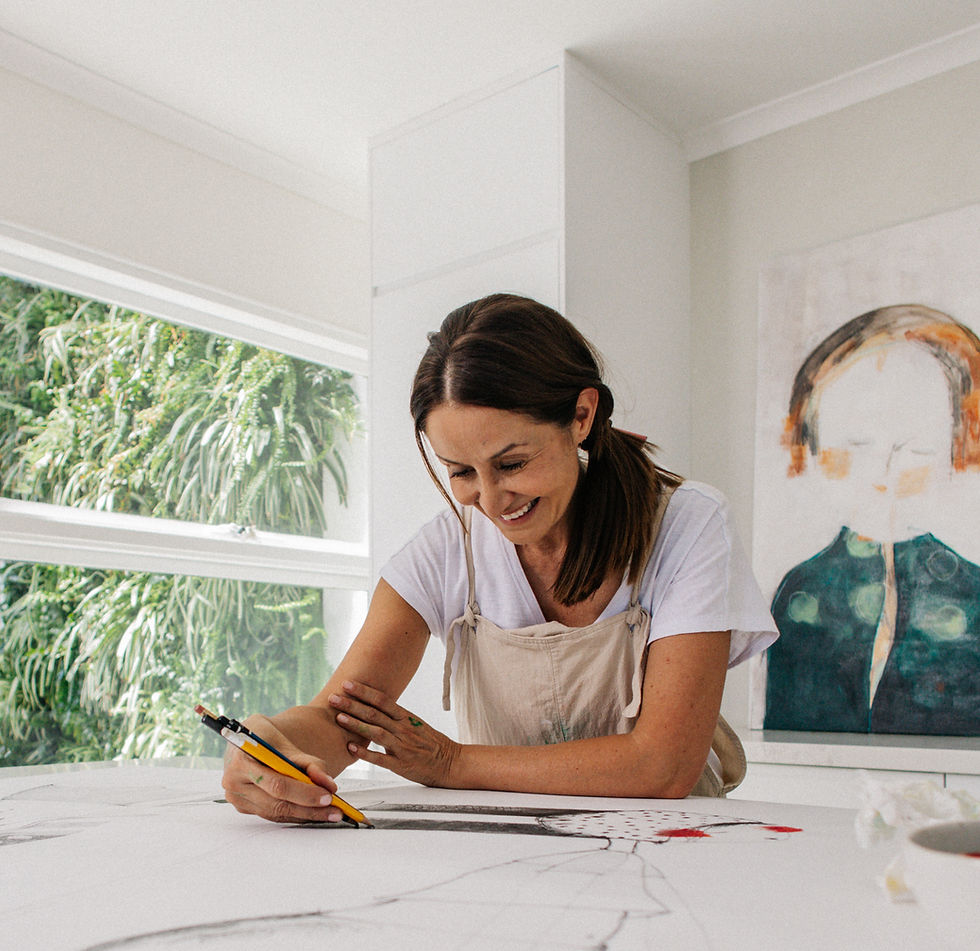
I hope you find these insights helpful; the paintings in the photos are large scale figurative work going to my solo exhibition in October 2026, at Oxford Street Gallery.
Comments